6-K: Report of foreign issuer [Rules 13a-16 and 15d-16]
Published on
UNITED STATES
SECURITIES AND EXCHANGE COMMISSION
Washington. D.C. 20549
Form 6-K
REPORT OF FOREIGN PRIVATE ISSUER PURSUANT TO RULE 13a-16 OR I5d-16
UNDER THE SECURITIES EXCHANGE ACT OF 1934
For the month of May, 2004
Novogen Limited
(Translation of registrant’s name into English)
140 Wicks Road, North Ryde, NSW, 2113, Australia
(Address of principal executive office)
[Indicate by check mark whether the registrant files or will file annual reports under cover of Form 20-F or Form 40-F. Form 20-F ü Form 40-F
[Indicate by check mark whether the registrant by furnishing the information contained in this Form is also thereby furnishing the information to the Commission pursuant to Rule 12g3-2(b) under the Securities Exchange Act of 1934. Yes No
[If “Yes” is marked, indicate below the file number assigned to the registrant in connection with Rule 12g3-2 (b): 82- ______.1
SIGNATURES
Pursuant to the requirements of the Securities Exchange Act of 1934, the registrant has duly caused this report to be signed on its behalf by the undersigned, thereunto duly authorized.
| Novogen Limited (Registrant) |
||||||
Date 26 May, 2004 |
By |
 |
||||
| *Print the name and title under the signature of the signing officer | Ronald Lea Erratt Company secretary |

6.04
NV-18: second oncology drug
into the clinic
NV-18, an anti-cancer drug developed by Novogen to treat melanoma and cholangio-carcinoma (gall bladder cancer), has entered its clinical development phase. NV-18, a patented new chemical entity, is a product of the Novogen oncology drug pipeline which produced phenoxodiol and which also has a number of other anti-cancer compounds at various stages of development.
The pipeline is based on intellectual property developed by Novogen that has identified a particular molecular structure-function relationship for potent anti-cancer drugs with negligible toxicity. Building on this property, Novogen scientists are creating a novel family of drugs that share a common ability to kill cancer cells in a highly selective manner, but which also can be directed against specific types of cancer. In the laboratory, NV-18 proved to be highly effective at killing all human cancer cells against which it was tested, and was particularly effective against melanoma and cholangiocarcinoma cells, two cancers which are notoriously aggressive and unresponsive to standard anti-cancer therapies.
Research done in collaboration with researchers at the University of Newcastle (Australia) has shown that NV-18 has proved to be over ten times more effective at killing melanoma cells in the test-tube than cisplatin or other highly cytotoxic anti-cancer drugs. In another pre-clinical collaboration, researchers at the University of Alabama at Birmingham (USA) demonstrated that NV-18 was effective in killing cholangiocarcinoma cells that are resistant to all standard drugs.
The first human clinical study with NV-18 is now being conducted at St George Hospital (Sydney, Australia). Six cancer patients will be used to test its bio-availability (the rate of absorption of the drug), its pharmacokinetics (its behaviour in the body), and its acute safety. Animal studies have shown that the drug can be given either orally or intravenously, and that it is without toxicity at dosages expected to be clinically effective.The purpose of this Phase 1a study is to confirm these findings over a treatment period of three days with cancer patients. The information from this study will form the basis of the design of a Phase 1b study (intended to commence in late 2004) in which NV-18 will be studied for safety and efficacy in patients with malignant melanoma.
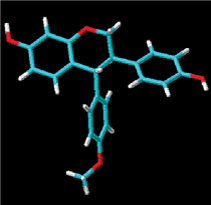
The unique molecular structure of NV-18.
Glucan Phase 2 trial progressing
A Phase 2 trial currently is evaluating the ability of the product, Glucoprime, to promote healing in skin ulcers. Glucoprime is a form of glucan, a carbohydrate drug that stimulates the wound healing process.
The trial is being conducted in Australia by the Novogen subsidiary company, Glycotex Inc, which holds the rights to the Novogen glucan technology. The Phase 2 trial is double-blinded and involves patients with chronic deep venous stasis ulcers of the legs. It involves sixty patients who are being randomised into three groups: placebo, low-dose Glucoprime or high-dose Glucoprime. Treatment is over 12 weeks and the response is being assessed on the basis of degree of wound closure. Venous stasis ulcers accompany conditions, such as varicose veins, where blood flow from the legs back to the heart is impeded. Pooling of blood in the lower limbs leads to skin breakdown and eventual ulceration that generally requires intensive therapy to reverse. In an earlier unblinded Phase 1 study, Glucoprime was assessed to be activating and maintaining the repair process in such ulcers. Glycotex Inc is seeking to confirm that effect by comparing Glucoprime therapy to a placebo, in a double-blind clinical trial. The study is expected to conclude later in 2004.
phenoxodiol
An interim analysis of the 24 patients confirmed that oral phenoxodiol was able to cause PSA levels to fall in men with metastatic prostate cancer who entered the study with rapidly rising PSA levels.
The strategy for phenoxodiol is to seek regulatory approval for the drug:
—
|
in the first instance for its use as a chemo-sensitising agent in refractory or chemo- or radio-resistant late-stage cancers; and | |
—
|
in the second instance for its use as a monotherapy for early-stage cancers. |
The clinical development plan for phenoxodiol has progressed strongly over the past 12 months in line with the program timetable, with the major highlights being as follows:
(a) phenoxodiol successfully completes monotherapy trial in ovarian cancer
Physicians at Yale-New Haven Hospital (Connecticut, USA) announced in April
2004 the results of a dose-finding study in patients with late-stage ovarian
cancer.
This trial was conducted as a preliminary study to test phenoxodiol in the form to be used as a chemo-sensitising agent and in anticipation of a subsequent combinational therapy trial. The purpose was to ensure the safety of phenoxodiol when administered as a monotherapy (using the same treatment regimen as intended for combinational use) and to gain an indication of an appropriate dose to be used in the later combinational study.
The Principal Investigator at Yale, Dr Thomas Rutherford, said, “We are excited that phenoxodiol has been able to provide an effect in women whose disease has been so heavily pre-treated and for whom we have run out of options” ....
(b) phenoxodiol commences combinational therapy trial in ovarian cancer
Based on the successful outcomes of the monotherapy trial, an announcement was
made in April 2004 concerning commencement of the follow-up trial of
phenoxodiol in patients with recurrent, refractory ovarian cancer. This is a
multi-national study involving Yale-New Haven Hospital in the US and an
Australian hospital. The patients in this study will have ovarian or primary
peritoneal cancers that have become refractory to platinum-based or
taxane-based drugs. Such drugs are the standard first-line therapies used in
ovarian cancer and remain the most effective drug therapies. Most late-stage
ovarian cancers ultimately become refractory to such therapies which means that
the cancer continues growing despite use of chemo-therapy. The purpose of this
study is
to see if phenoxodiol is able to restore the anti-cancer action of cisplatin or
paclitaxel.
The study will involve 60 women randomised to three treatment arms — paclitaxel only, phenoxodiol + paclitaxel or phenoxodiol + cisplatin. Phenoxodiol will be administered by intravenous injection on two consecutive days each week, followed by an intravenous injection of paclitaxel or cisplatin immediately following the second phenoxodiol injection. The paclitaxel-only arm has been included in order to provide definitive evidence of the refractory status of these cancers, with patients moving to the phenoxodiol + paclitaxel treatment arm if they have shown no response within 3 weeks of commencing therapy.
An additional outcome of this study is to determine the minimum effective dose of paclitaxel or cisplatin when used in combination with phenoxodiol. Pre-clinical studies have shown that in addition to sensitising the cancer to the killing effect of standard anti-cancer drugs, phenoxodiol allows the effective dose of those chemotherapy drugs to be reduced to the point where they are non-toxic to non-cancer cells. In this study, the dosages of cisplatin and paclitaxel will be reduced to the level where they yield only minimal toxicity.
(c) Results announced for phenoxodiol monotherapy study in late-stage prostate
cancer
Interim results were announced in April 2004 by the clinical investigators
involved in this Phase Ib/IIa study in hormone-refractory, late-stage prostate
cancer patients. This Australian study involving 24 men is a dose-response
study intended to confirm the biological activity and safety of the oral
phenoxodiol formulation in prostate cancer patients. This trial represented
the first study of the oral formulation and was intended to show whether the
drug had any impact on blood PSA levels (Prostate Specific Antigen — a
recognised prostate cancer marker) as an indication of its ability to affect
the biology of metastatic prostate cancer. If an effect was obtained, then it
was a further objective of the study to determine an appropriate dose. The
trial is fully enrolled, with the last patient starting treatment in February
2004.
An analysis of the interim data of the 24 patients confirmed that oral phenoxodiol was able to cause PSA levels to fall in men with metastatic prostate cancer who entered the study with rapidly rising PSA levels. This effect was dose-dependent, with the two lower doses (20 and 80 mg per 8 hours) producing stabilisation of PSA levels in some men, and the two highest doses (200 and 400 mg per 8 hours) producing reduced PSA levels in 50% of patients.
Although this trial will not conclude formally until the last patient completes 12 months of phenoxodiol therapy, planning has commenced for the follow-up Phase II study in which phenoxodiol will be used as a chemo-sensitiser in combinational therapy.
(d) Oral phenoxodiol in combination with platinums
This Australian study commenced in April 2004 and is intended to test the
ability of oral phenoxodiol to chemo-sensitise solid cancers to the effects of
either cisplatin or carbo-platin. This is a complementary study to the
late-stage prostate cancer study currently being planned and is intended to
test the effect of phenoxodiol as a chemo-sensitiser across a range of solid
cancers, and renal cancer in particular. Twenty patients are to be enrolled,
and the data will provide an indicator to the range of cancers that could be
the subject of larger studies. Renal cancer remains a high priority for
recruitment in this study, based on observed clinical responses in other
phenoxodiol studies.
(e) Cervical cancer study
This Yale (US) study commenced in March 2004 and is evaluating the efficacy of
phenoxodiol as a monotherapy in early-stage cancer. Patients with a primary
diagnosis of cervical cancer and who are scheduled for surgical resection after
4 weeks are being treated with phenoxodiol alone in increasing doses. The
efficacy of phenoxodiol is being evaluated on the basis of the change in tumour
size and tumour appearance histologically.
MEI investor
presentations
Marshall Edwards Inc (MEI) is the US anti-cancer company with the license to develop and commercialise phenoxodiol. It also has the first and last rights to any further Novogen anti-cancer compounds in clinical trials, such as NV-18.
Novogen now owns 87% of the stock of Marshall Edwards Inc. The listing of Marshall Edwards Inc on the US National Nasdaq stock market in December was extremely successful. The stock which was offered to US investors was three times oversubscribed, and the share price doubled upon listing even though the initial price was above the range nominated in the prospectus. The share offer was available to only US residents because of prospectus requirements which were mandated by the relevant regulator — the US Securities and Exchange Commission. US shareholder interest in the company’s stock continues to develop.
Marshall Edwards Inc is also listed on the London Stock Exchange AIM and is the twelfth largest biotechnology company in Europe (measured by market capitalisation in ‘Bioventure View’ 2.3.04). However as it was apparent that the company’s share register had only a modest European institutional following, an investor tour of selected European cities took place in March. Over four days, company presentations were made to potential institutional investors in Munich, Zurich, Geneva, Basle and Vienna. Even with the AIM listing, it is apparent that European investors will be equally, if not more, comfortable with Nasdaq stock when they choose to invest.
US institutional investors were also included in the presentations and over a further four days presentations were given in the states of New York, New Jersey, Pennsylvania, Delaware and California. US interests continue to dominate the share trading in both Novogen Limited and Marshall Edwards Inc.
Novogen wins grant
Novogen to receive funding under
Government P3 Scheme
Along with only 11 other pharmaceutical companies nationwide, Novogen has been selected to receive funding under a new Australian Government initiative to encourage pharmaceutical Research and Development (R&D). The highly competitive scheme allows for a cash rebate on the corporate R&D expenditure which is in excess of the previous 3 year baseline expenditure. The scheme was open to Australian and foreign companies drawn from across the pharmaceutical industry, including biotechnology companies, generic medicine manufacturers and multinational pharmaceutical companies undertaking R&D in Australia. Novogen has been awarded the maximum grant allowable under the scheme which could represent a contribution towards R&D expenses of up to $A10m over the next 5 years. It is significant that only 5 other companies were awarded a grant at the maximum level and large pharmaceutical companies such Merck Sharpe & Dohme, Eli Lilly and CSL were selected along with Novogen in this top tier award bracket.
Apart from the opportunity this funding provides to expedite the Company’s R&D plans, the decision reflects an endorsement by expert advisory panels that the Company’s R&D strategies are both commercially and scientifically sound, and have been judged to be able to deliver real value to the national pharmaceutical industry output.
Clinical announcements
This year has seen an acceleration of clinical trials. In addition to the pre-clinical and clinical results reported at the major anti-cancer conferences in the US during February and March, and the award of the maximum P3 grant from the Australian Government (see this page), the clinical trial program expansion so far this year can be tracked by the following announcements:
February
The commencement of human trials with oral phenoxodiol at Yale University
Medical in the US for cervical cancer;
March
The commencement of human trials with
oral phenoxodiol for renal cancer at St George Hospital in Australia;
April
The commencement of human trials with intravenous phenoxodiol in combination
with certain chemotherapies at Yale University Medical in the US, for ovarian
cancer;
May
The commencement of human trials with both oral and intravenous versions of
NV-18 at St George Hospital in Australia (see lead story).
Focus on Promensil
and Canada
ASX Media Release — 20 May 2004
Novogen patent granted in Canada
Pharmaceutical company, Novogen, has been granted patent coverage over its OTC products being sold in Canada. The patent covers the isoflavone composition of the products Promensil, Rimostil and Trinovin as well as the use of isoflavone health supplements for the treatment of menopause symptoms.
Highlight on Canada
The Novogen business that has led the way
in concentrating on professional healthcare communication is our Canadian
company. Since inception in 1999, it has focused the communication strategy on
building doctor and specialist support for the Novogen range of products. This
strategy has resulted in Canada having the second highest Promensil sales per
capita of all Novogen territories. Communications with GPs commenced in 2000.
Every 4 to 6 months since 2000 a rapidly growing number of GPs and specialists
have receive updated clinical information, samples and consumer information to
improve counselling sessions between doctor and patient. In addition, Novogen
has developed a close relationship with the SOGC (Canadian Society of
Obstetricians and Gynecologists). SOGC’s recognition of Promensil’s clinical
studies has generated the opportunity for Novogen to present at Canada’s
leading women’s health symposiums and conferences. The outcomes of a focused
professional program in Canada is Promensil’s ranking as the second largest
herbal product in the Canadian market (as measured by AC Nielsen) and sales
growth year-on-year since 1999.
This insight into the Canadian case study has allowed Novogen to see the benefits in introducing a global professional healthcare oriented strategy to all territories.
Promensil
Promensil, Novogen’s leading consumer brand, has had four new clinical trials
published over the past 6 months. The new trials continue to build on the
evidence that Promensil is the best natural product to relieve the symptoms of
menopause. Novogen’s focus on an ongoing clinical trial program is a deliberate
strategy to differentiate our brands from other complimentary medicine
products.
These studies, in conjunction with 14 other published trials, provide Novogen with the opportunity to market Promensil as the only natural product clinically proven to safely relieve menopause symptoms and maintain bone and heart health.
The essential benefit to be communicated to healthcare professionals, healthcare retailers and consumers of Promensil is, Promensil does more than any other menopause product.
The level of clinical support for Promensil will continue to grow. In addition to the four trials published over the past 6 months, Novogen expects another two studies will be published in 2004. Also, another very significant clinical trial is to be presented at a leading women’s health conference within the next 12 months. The significance of each study and the changing menopause treatment environment provides Novogen with the opportunity to communicate directly to Obstetricians, Gynaecologists and General Practitioners. A natural menopause product with 18 published clinical studies supporting efficacy, safety and quality claims is a rare and compelling proposition. The communication to healthcare professionals will be the focus of the Company’s future marketing activities.
Novogen products are available in Australia, USA, Canada, UK, Netherlands, Ireland, Austria, Belgium, New Zealand, South Africa, Singapore and Malta. Expansion into new territories is planned over the next 12 months. The Novogen consumer business is well situated to generate steady growth over the long term based on a position of clinically proven, natural products that provide more to healthcare professionals, retailers and consumers.
Findings of the most recent studies:
| Author |
Journal |
Results |
||
Atkinson C et al
|
American Journal of Clinical Nutrician 79 (2): 326-33 2004 | A double-blind, randomised, placebo-controlled trial showed Promensil attenuates the loss of bone mineral density content in the lumbar spine of menopausal women. | ||
Woods R et al
|
Journal of the British
Menopause Society 2003. S2: 23. |
A double-blind, randomised, placebo-controlled trial found the Vaginal Maturation Index in superficial cells in the vagina of patients treated with Promensil improved significantly compared to the placebo group. There was no increase in endometrial thickness. | ||
Atkinson C et al
|
Breast Cancer Research 2004; 6:R170-R179 | A double blind, randomised, placebo-controlled trial showed the use of Promensil over one year does not increase mammographic breast density, unlike conventional HRT. | ||
Campbell et al
|
European Journal of Clinical Nutrition 2004; 58: 173-179 | A randomised, placebo controlled crossover study found that 1 month treatment with Promensil has a positive affect on HDL cholesterol and a small effect on IGF status, an indicator of reduced risk of breast cancer. |
For further information
please contact Novogen
140 Wicks Road, North Ryde
NSW Australia 2113
Telephone +61 2 9878 0088
Facsimile +61 2 9878 0055
novogen@novogen.com
www.novogen.com