EVT801

Limiting Tumor Spread

EVT801 is designed to block VEGFR-3, a key receptor that helps drive the formation of new blood and lymphatic vessels. By targeting this pathway, EVT801 aims to limit the growth of vessels that support tumor development.

Pipeline

EVT801
Study / Indication Trial ID Preclinical Phase 1 Phase 2 Phase 3 Market Sponsor
Advanced Solid Tumors NCT05114668
Preclinical
Phase 1

Development Stage

Phase 1 Completed

Lead Indications

Potentially high-grade serous ovarian cancer (HGSO)

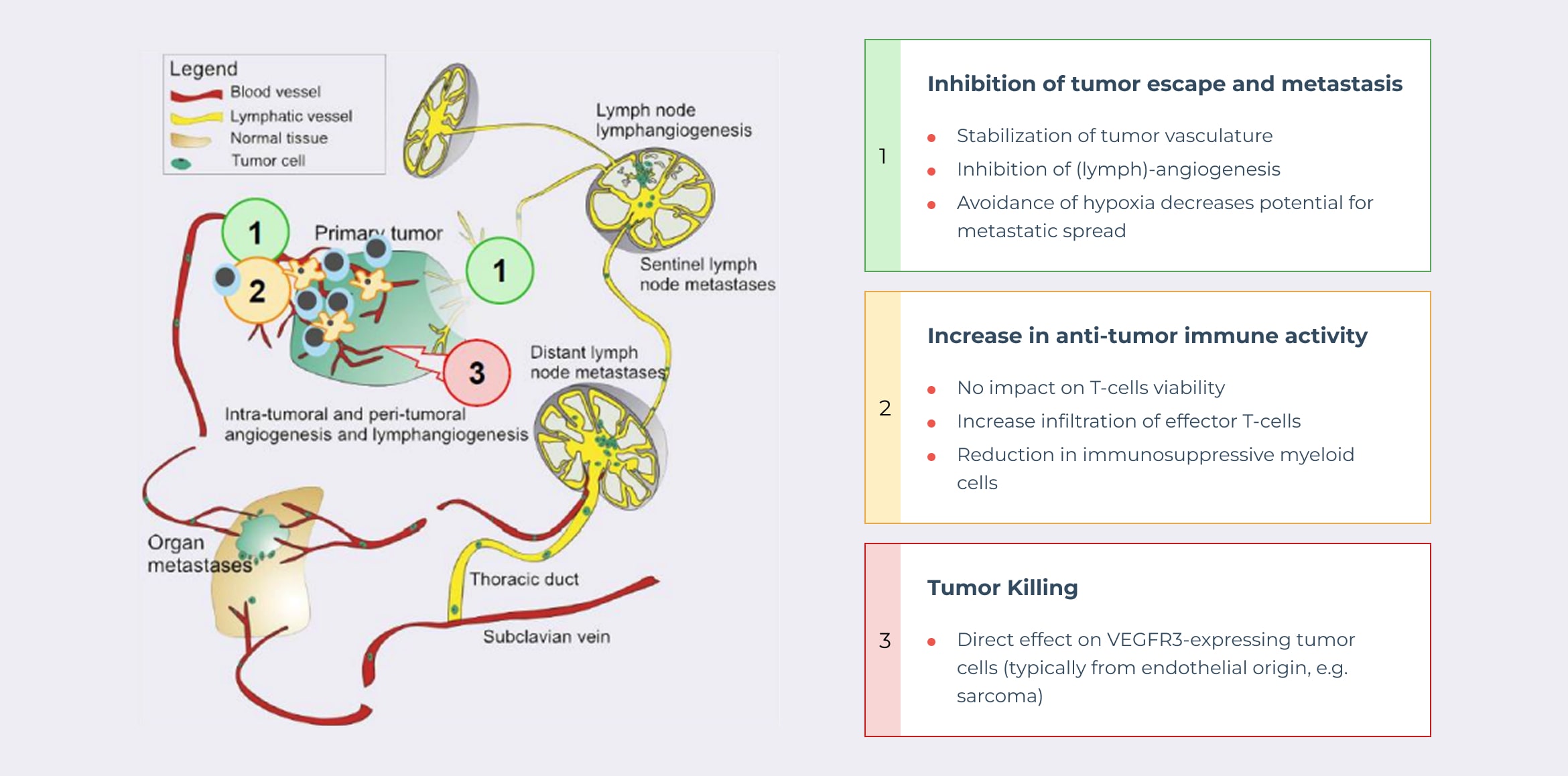
1: Inhibition of tumor escape and metastasis - Stabilization of tumor vasculature, Inhibition of (lymph)-angiogenesis, and avoidance of hypoxia decreases potential for metastatic spread. 2: Increase in anti-tumor immune activity - No impact on T-cells viability, Increase infiltration of effector T-cells, and Reduction in immunosuppressive myeloid cells. 3: Tumor Killing - Direct effect on VEGFR-3-expressing tumor cells (typically from endothelial origin, e.g. sarcoma)

Mechanism of Action

Inhibiting VEGFR-3

By selectively inhibiting VEGFR-3, EVT801 suppresses lymphangiogenesis, stabilizes tumor-associated vasculature, and mitigates hypoxic conditions within the tumor microenvironment. These combined effects help limit tumor progression, immune evasion, and metastatic dissemination, supporting its potential as a differentiated anti-angiogenic therapy.

Unique Tumor Vessel Control

Targeting VEGFR-3

EVT801 uniquely targets VEGFR-3, a pathway not addressed by most existing cancer therapies. By blocking VEGFR-3, EVT801 helps stabilize blood and lymphatic vessels around tumors.

This distinct mechanism aims to reduce tumor growth and spread by limiting the pathways cancer uses to escape and metastasize.

Upcoming Advancements

  • Consolidate safety data at RP2D and our hypotheses on EVT801 mode of action
  • Explore strategic collaborations and/or partnerships

Ongoing Clinical Trials

Learn more about how our transformative therapies are progressing through clinical development by exploring our current clinical trials.

View Our Clinical Trials

Shifting Innovation

The future of targeted oncology lies not simply in blocking cancer signaling, but in reprogramming the biology that enables cancer to survive, adapt, and spread.

View Our Technology

Our Research in Focus

Explore our posters and publications to access our latest scientific data, clinical insights, and contributions to advancing oncology research.

View Our Posters & Publications

Discover Our Other Candidates

Paxalisib

Paxalisib is a potentially best-in-class, oral, brain-penetrant dual P13K/mTOR inhibitor designed to reprogram cancer biology through precision pathway inhibition, restoring anti-tumor immunity and overcoming therapeutic resistance.

Learn About Paxalisib

NDL2

We are developing NDL2, a first-in-class PD-L1 degrader designed to selectively target tumor-associated PD-L1, extending immunotherapy beyond extracellular checkpoint blockade.

Learn About PD-L1 Protein Degrader

SETDB1 Inhibitor

We are developing MSETC, a first-in-class therapeutic targeting disease-associated SETDB1 complex, to restore anti-tumor immune signaling and overcome mechanisms of immune evasion.

Learn About SETDB1 Inhibitor