Paxalisib

Reprogramming Cancer Biology

Paxalisib is a highly differentiated, brain-penetrant oral PI3K/mTOR inhibitor with origins in neuro-oncology. The program has advanced across multiple solid tumor indications, demonstrating our commitment to expanding our impact in cancer therapy.

Pipeline

Paxalisib
Study / Indication Trial ID Preclinical Phase 1 Phase 2 Phase 3 Market Sponsor
Breast Cancer
PaxPlus-ABC TNBC: Triple-Negative Breast Cancer & HER2- ACTRN12624001340527
Preclinical
Phase 1
Neuro-Oncology
GBM AGILE Glioblastoma NCT03970447
Preclinical
Phase 1
Phase 2
5G-PEARL Glioblastoma NCT07391215
Preclinical
Phase 1
Phase 2
Paxalisib & Diet Combination Glioblastoma NCT05183204
Preclinical
Phase 1
Phase 2
LUMOS2 Gliomas ACTRN12623000096651
Preclinical
Phase 1
Phase 2, 50% complete
OPTIMISE Pediatric Brain Cancer NCT06208657
Preclinical
Phase 1
Phase 2, 50% complete
PNOC022 DIPG: Diffuse Intrinsic Pontine Glioma NCT05009992
Preclinical
Phase 1
Phase 2
PNOC035 AT/RT: Atypical Teratoid Rhabdoid Tumor NCT07447076
Preclinical
Phase 1
Phase 2, 15% complete
Genomically-Guided Brain Metastases Brain Metastases NCT03994796
Preclinical
Phase 1
Phase 2

Development Stage

Clinical

Lead Indications

Advanced Breast Cancer
Glioblastoma
Childhood Brain Cancer

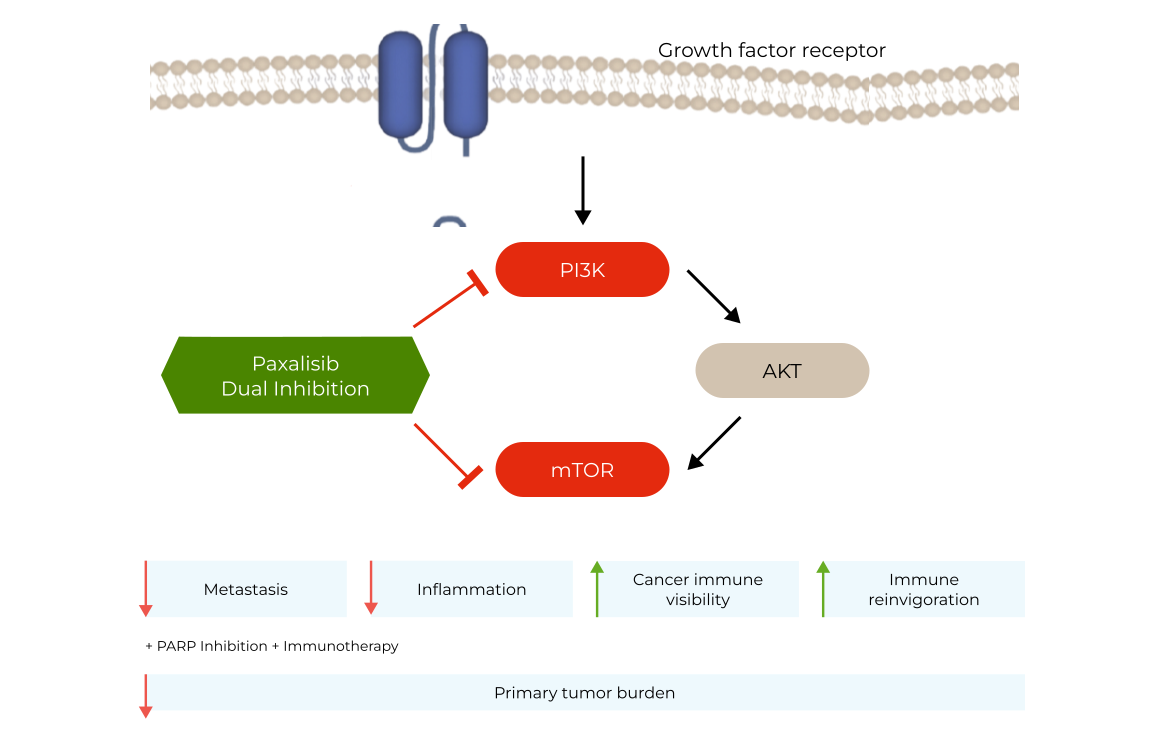
PI3K/mTOR Inhibitor Mechanism of Action. Decreases metastasis and inflammation. Increases cancer immune visibility and immune revinvigoration. Alongside PARP inhibition and immunotherapy, primary tumor burden decreases.

Mechanism of Action

PI3K/mTOR Inhibitor

The PI3K/mTOR pathway is one of the most frequently dysregulated signaling networks in cancer, playing a critical role in tumor cell growth, proliferation, survival, metabolism, and treatment resistance. Dual inhibition of PI3K and mTOR provides comprehensive blockade of this pathway, disrupting key oncogenic signals that drive cancer progression and disease maintenance.

Positioned as a Backbone

Functional Epigenetic Reprogramming

Beyond its established role in pathway inhibition, emerging research has demonstrated that paxalisib can influence downstream transcriptional, epigenetic, and immune regulatory processes that shape tumor behavior. At de-escalated doses, this approach has the potential to modulate cancer cell behavior associated with immune evasion, metastatic progression, and therapeutic resistance.

This concept forms the foundation of our functional epigenetic reprogramming strategy, which seeks to leverage selective modulation of disease-driving biology to restore immune responsiveness, alter tumor cell behavior, and improve treatment outcomes. We believe this differentiated mechanism represents an important evolution beyond traditional kinase inhibition and may create new opportunities across multiple cancer types.

Upcoming Advancements

The next phase for paxalisib focuses on advancing clinical development across multiple tumor types to accelerate its path toward regulatory approval.

Advanced Breast Cancer

  • Provide additional preclinical data and updates from the QIMR collaboration throughout the year
  • Provide ongoing updates from Phase 1b advanced breast cancer clinical study throughout 2026

Glioblastoma

  • Provide ongoing updates from multiple clinical studies throughout 2026
  • Anticipated follow-up FDA Type C meeting to discuss commercial and development path forward in GBM

Pediatric & Brain Metastasis Programs

  • PNOC team to complete further data analyses and provide updates
  • Updates from other pediatric and brain metastasis trials
  • Initiate enrollment for PNOC035 AT/RT study

Ongoing Clinical Trials

Learn more about how our transformative therapies are progressing through clinical development by exploring our current clinical trials.

View Our Clinical Trials

Shifting Innovation

The future of targeted oncology lies not simply in blocking cancer signaling, but in reprogramming the biology that enables cancer to survive, adapt, and spread.

View Our Technology

Our Research in Focus

Explore our posters and publications to access our latest scientific data, clinical insights, and contributions to advancing oncology research.

View Our Posters & Publications

Discover Our Other Candidates

NDL2

We are developing NDL2, a first-in-class PD-L1 degrader designed to selectively target tumor-associated PD-L1, extending immunotherapy beyond extracellular checkpoint blockade.

Learn About PD-L1 Protein Degrader

SETDB1 Inhibitor

We are developing MSETC, a first-in-class therapeutic targeting disease-associated SETDB1 complex, to restore anti-tumor immune signaling and overcome mechanisms of immune evasion.

Learn About SETDB1 Inhibitor

EVT801

EVT801 is an oral, highly selective small-molecule inhibitor of VEGFR-3 designed to modulate lymphangiogenesis and metastatic spread.

Learn About EVT801